
Key Takeaways
- A cedar roof conversion can uncover any degradation that has occurred underneath older roofing products.
- Any roof decking that is damaged must be repaired prior to installing new roofing products.
- Newer underlayments and flashings can enhance moisture resistance.
- Ventilation considerations will need to be evaluated in the transition from a cedar roof system to other roofing products.
How does the roof of your home become affected if your existing cedar roof starts to age? You may see the shakes, but what should really be on your mind is what is going on beneath them. Years of moisture exposure, damaged shakes, and hidden deterioration can gradually affect the roof deck and other supporting components.
Cedar roof conversion is more than just a change of look for your home. Properly done, it allows the roofer to examine the structural components, strengthen any weak points, and put down a state-of-the-art roofing system that will improve moisture control. This could be especially important in British Columbia, where the roofs have to contend with constant wet weather conditions.
What Happens During a Cedar Roof Conversion?
Installing a newer cedar roof involves more considerations than just laying the new roofing over the old one. Each type of roofing system has specific building needs, and altering the materials used may also affect the moisture ventilation properties of the entire roof assembly.
1. The Existing Roof Can Be Properly Examined
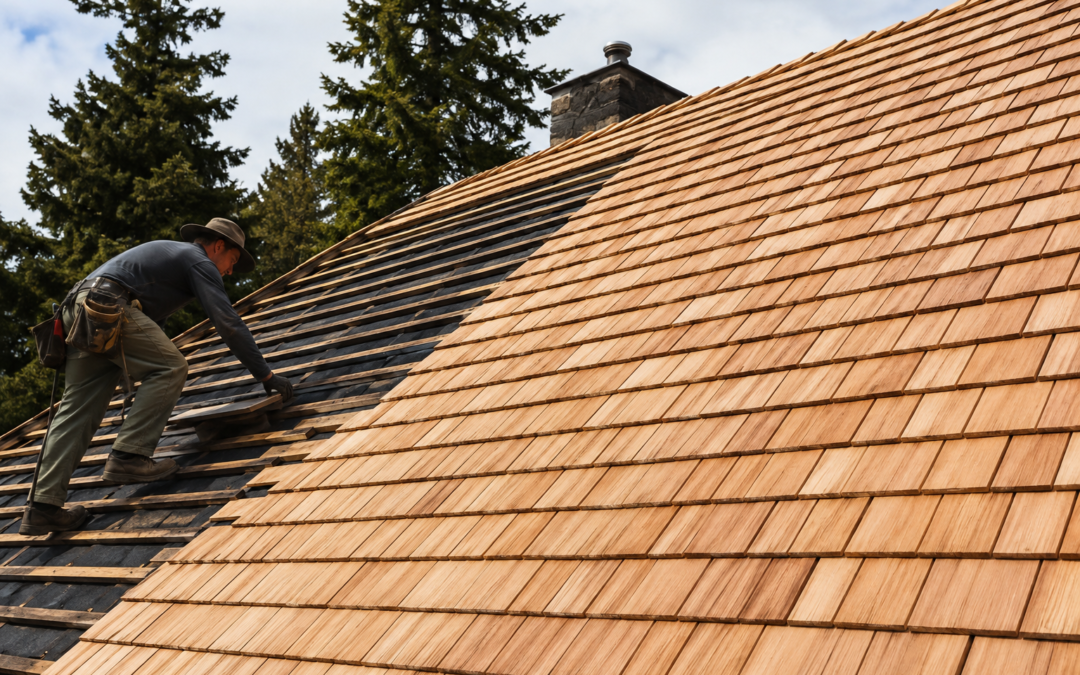
A worn-out cedar roof may hide issues that are hard to notice from the exterior side. The removal of such an old roof gives one an excellent chance to see the real situation with the roof deck, sheathing, flashing, and other elements of the structure.
This gives an opportunity to see any deteriorated areas before installing a new roof. Catching those problems during the conversion can help prevent hidden damage from being carried into the new roofing system.
2. Damaged Roof Decking Can Be Addressed
Moisture that repeatedly reaches the underlying structure can eventually weaken roof decking. Leaving compromised sections in place can affect how securely the new roofing materials are installed.
Replacing or repairing damaged decking gives the new roof a more reliable surface to work from. This is one of the reasons a proper conversion should involve more than simply removing old cedar and installing something new.
3. Modern Moisture Protection Can Be Added
Older cedar roofing systems were designed to manage water differently from many modern roofing assemblies. During a conversion, new underlayments and water-resistant layers can be incorporated into the roof design.
These components provide another line of defense against rain reaching the structure below. Proper detailing around valleys, eaves, and other vulnerable areas is especially important in a wet climate.
4. Ventilation Can Be Reconsidered
Changing the roofing material can also change how the roof assembly behaves. Cedar naturally allows a degree of drying, while some modern roofing systems create a more enclosed assembly.
This means that it needs to be evaluated instead of being assumed to be sufficient. The right intake and exhaust airflow will assist in controlling moisture inside the attic.
5. It Can Reduce the Risk of Carrying Old Problems Forward
Imagine installing a brand-new roof over a deck that already has soft or damaged sections. The new exterior might look excellent, but the underlying weakness would still be there.
A well-planned conversion provides a chance to deal with these problems first. Vancouver can therefore approach the project as an opportunity to renew the complete roofing system rather than simply changing its outer appearance.
6. The Roof Can Be Adapted to Current Roofing Requirements
Cedar roofing has specific requirements relating to slope, exposure, underlay, ventilation, and installation. Modern roofing products have their own specifications as well.
A conversion allows the roof assembly to be prepared for the material being installed instead of forcing a new product onto an old system that was designed for something else.
7. Better Drainage Details Can Be Incorporated
Managing water is critical during the replacement of the old roof. All elements of valleys, eaves, gutters, flashing, and roof penetrations should be in sync such that the water doesn’t stay in places that might cause damage to the building.
In a location like Delta, where there is regular rainfall for a long time, taking care of these things will ensure better water management by the new roof system.
8. It Can Help Protect the Roof Over the Long Term
A successful renovation must eventually lead to a solid base for many future years. Deterioration of materials, addressing structural issues, improved moisture resistance, and ventilation may help improve the performance of the roof.
There are various factors affecting the aging process of cedar roofs, including the quality of cedar itself, roof maintenance, and exposure to weather conditions. Additionally, the National Park Service states that the service life of wood roofing depends much on such factors as the quality of materials used, roof design, installation, maintenance, and climate.
Why Professional Planning Matters
A cedar conversion should never be treated as a simple material swap. It is important to carry out an assessment of the current roof prior to choosing the replacement roof system. Structure, ventilation, drainage, flashing, and moisture exposure should all be considered.
In Langley, this will ensure that the result will be a roof that looks good and has been properly prepared.
Building a Stronger Starting Point for the Next Roof
An old cedar roof does not necessarily mean the structure beneath it has failed. It does mean that the condition of those hidden components deserves a closer look before the next roofing system is installed.
Cedar Roof Conversions can provide an opportunity to uncover deterioration, repair weak areas, improve water management, and prepare the roof assembly for modern materials. At Anytime Roofing, we help homeowners assess these underlying concerns and plan roofing work around the actual condition of the property rather than simply covering the visible problem.