
Key Takeaways
- Potential damage to your roof starts near vulnerable areas like valleys, flashing, vents, and others.
- Moisture will spread from the area where it first entered your roof before being detected.
- Damaged insulation and decking on your roof can be the source of bigger trouble.
- Waterproofing is effective when it is done along with drainage and ventilation.
- Roof inspection will help detect moisture problems before any costly repair becomes necessary.
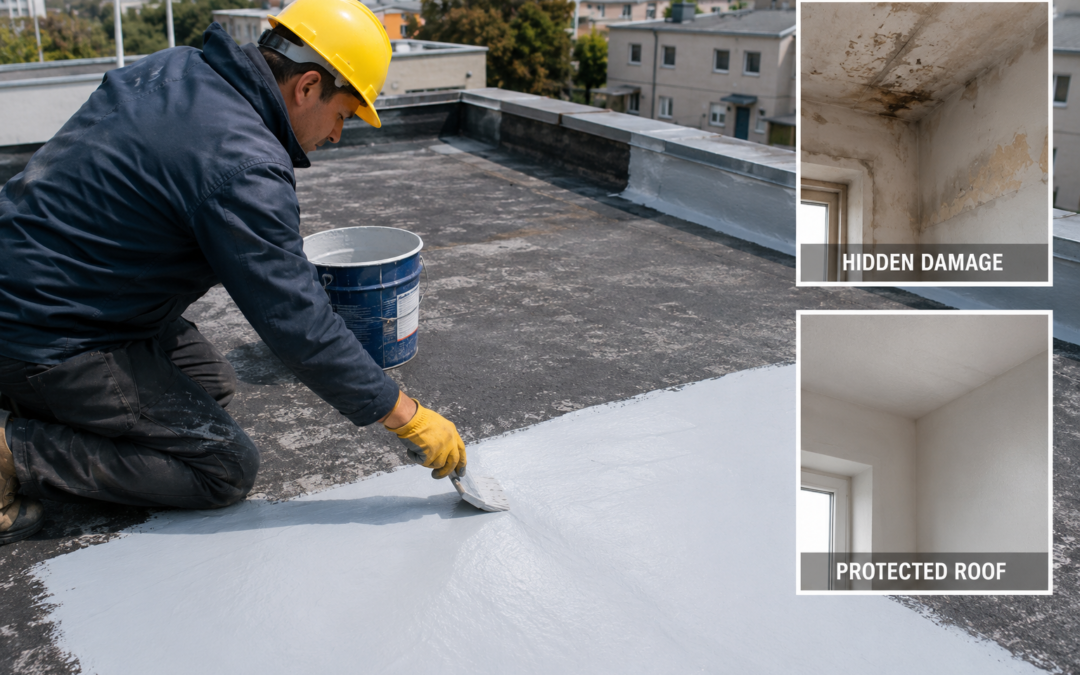
Can you imagine how your roof appears great but has issues going on inside because of moisture? Damage in the roof doesn’t necessarily occur due to leaking. Water could be entering via small vulnerabilities around flashing, valleys, vents, and edges of the roof.
That’s why you should care about water management before the stains show up on your ceiling. As stated by the U.S. Department of Energy, vulnerable roofs could have water entering the roof and reaching other parts of the building. This creates an environment where mold growth and other damage might occur. Roof Waterproofing can help you prevent such issues by avoiding moisture.
Where Does Hidden Roof Moisture Usually Begin?
Every moisture issue does not necessarily originate from the center part of the roof. On the contrary, most of the time, the water seeps into the roof through the junctions between different roof sections. This knowledge can help one recognize possible problems easily.
1. Roof Valleys Can Collect More Water
Valleys occur where two slopes of the roof intersect, and as such, they collect plenty of rainwater. However, if not adequately safeguarded or if there is any damage in the valley area, water will easily seep underneath the roofing material.
This problem can be solved using water diversion sheets and proper flashing.
2. Flashing Needs More Attention Than It Gets
Flashing will surround elements including chimneys, vent pipes, walls, and others. This joint can be prone to vulnerabilities as a result of aging and wear and tear.
A tiny opening may not immediately lead to a leakage problem. Instead, moisture can gradually move through the roofing assembly and damage materials below the surface.
3. Moisture Can Reach the Insulation
Once water gets beneath the exterior roofing layer, insulation can become one of the first hidden areas affected. The wet insulation will cause inefficiency and result in a damp roof assembly.
This issue can be particularly serious because it can take quite some time before the problem is detected inside the building.
4. Small Leaks Can Travel
Water doesn’t have to be right below where it entered into your structure. It could run along various parts of your roof system before it gets to the ceiling stain.
This means that you shouldn’t immediately assume that a spot on your ceiling is what is being damaged. Proper inspection would reveal where the problem really lies.
5. Persistent Moisture Can Affect Structural Materials
The decking and other materials of the roof start deteriorating when they become wet for an extended period of time. Moisture becoming uncontrolled and entering the building is among the major risks posed by roof damage, as stated by Building Science.
For residents of Vancouver, who receive many rainy days in a year, it is very important to make sure that water drains from the vulnerable areas.
6. Waterproofing Works as Part of a Bigger System
Waterproofing is not an independent measure that should stand alone. In addition to proper waterproofing, an effective roof should also have proper drainage, flashing, underlayment, and venting.
Through proper coordination of all these parts, water will find it difficult to enter and remain trapped inside the roof system.
7. Prevention Can Be Easier Than Interior Repairs
By the time the water reaches the drywall, insulation, or ceiling of your home, the problem will have become much bigger than a simple roof issue. Being aware of these weak areas can save the homeowner from this domino effect.
A professional can pinpoint where the flashing may be failing, where new roof material needs to be installed, or where there is a drainage problem.
What Homeowners Often Miss About Roof Moisture
In some cases, it may look like there is no problem at all with the roof while moisture is gradually penetrating inaccessible places. Places such as valleys, roof-to-wall junctions, flashings, and others are especially susceptible because they are the places where various elements of the roof come together.
In the case of the Delta area residents, it pays to pay attention to these locations. If water is properly diverted and susceptible areas are safeguarded, then moisture will have much less chance of reaching the other components of the roof assembly.
Give Your Roof Better Protection Against Moisture
Water damage often doesn’t show up right away because it starts with a small flaw that only becomes noticeable once water has already reached below the roof level. With the right flashing, drainage, inspection, and roof waterproofing, one can be sure of keeping any extra water off the weak spots.
It is possible for property owners to address any weak areas before they become major repair issues by being proactive about their roof maintenance needs. At Anytime Roofing, we can evaluate your roof and let you know about any potential trouble spots, which should help prevent future problems.